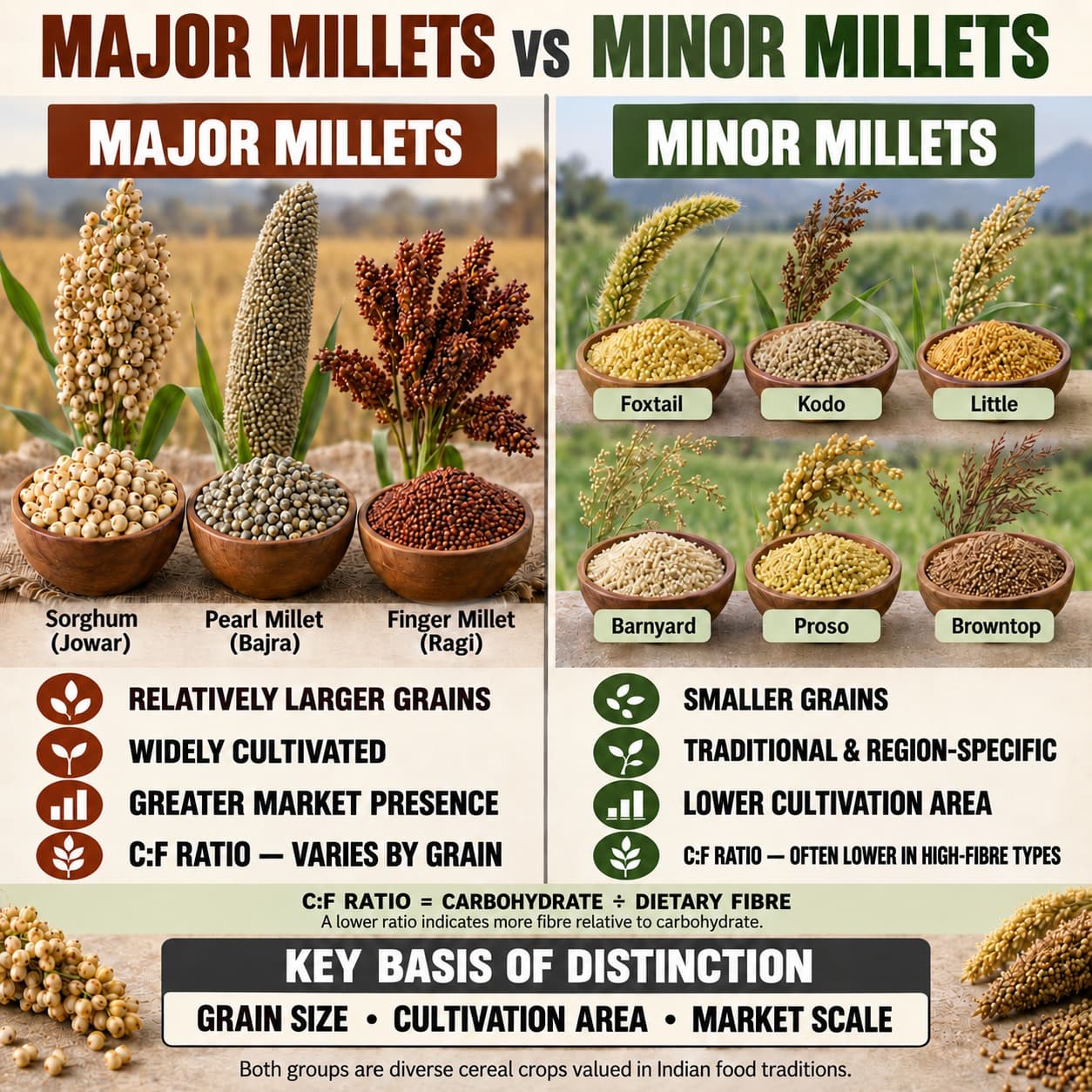
The words “major” and “minor” millet can sound as though they describe nutritional importance. They do not. The distinction is largely historical and agricultural, referring broadly to the relative prominence, production and cultivation of different millet groups.
In India, major millets commonly include pearl millet, finger millet and sorghum. Small or minor millets include foxtail, little, kodo, barnyard and proso millet. These smaller grains have often received less attention in mainstream food systems, even though they have long been important in regional diets.
Finger millet, for example, is widely associated with ragi-based foods. Pearl millet is traditionally used for rotis and other preparations, particularly in dry regions. Sorghum is consumed as grain, flour and traditional breads. Among the small millets, foxtail, little, kodo, barnyard and proso can be prepared in rice-like dishes, porridges, breakfast foods and value-added products.
Nutritionally, it is better not to assume that one group is automatically superior to the other. The nutrient profile varies from one species to another and can also change with variety, processing and preparation.
The Indian Food Composition Tables provide food-specific data rather than treating all millets as nutritionally identical.
The real opportunity is diversity. Including different millets can broaden the range of grains in the diet and introduce different flavours and textures.
For consumers, the labels “major” and “minor” are therefore less important than learning how each grain behaves in the kitchen. A little millet may work beautifully in a soft khichdi, while foxtail millet can produce a pleasantly separate cooked grain. Kodo millet may suit pulao-style dishes, and barnyard millet can be used in light, quick-cooking meals.
Millet diversity is not a hierarchy. It is a culinary and agricultural resource.
